
Manure is a mixture of animal waste and plant bedding (straw, shavings) that, once composted, gradually releases nitrogen, phosphorus, and potassium into the soil. When applied to a lawn, it acts both as an organic fertilizer and as an amendment, nourishing the grasses while improving the soil structure. However, it is essential to choose the right form and timing to avoid the opposite effect: burning, fungal diseases, or weed invasion.
Fresh manure or composted pellets: what changes for the lawn
Fresh horse or cattle manure contains a high proportion of nitrogen in the ammoniacal form. Spread as is on a lawn, it can burn the grass blades within a few days. It also carries weed seeds that germinate as soon as conditions are favorable.
Composted manure pellets represent a safer alternative. The composting process breaks down unwanted seeds, stabilizes nitrogen, and significantly reduces odors. For several years, manufacturers specializing in lawn products have favored these stabilized forms precisely because they limit the risks of burning and contamination by weeds.
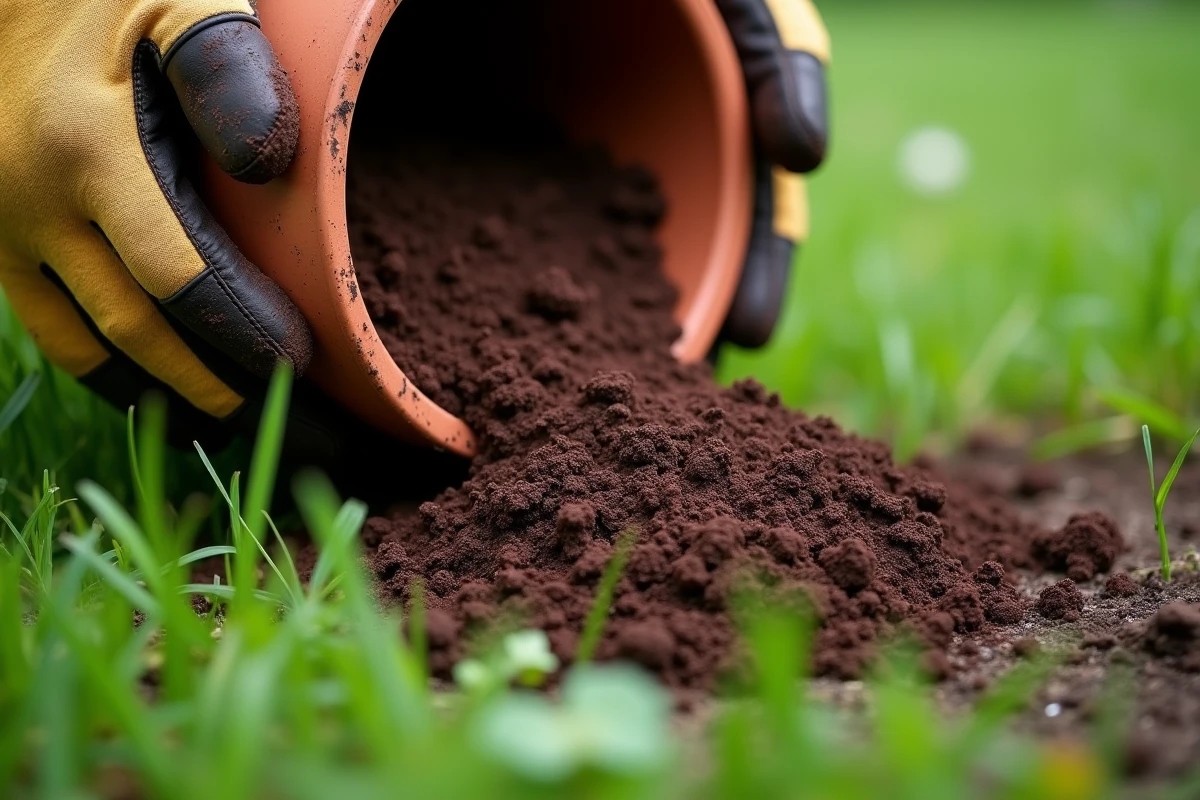
To use manure on the lawn without damage, the rule is simple: never apply manure that has not undergone at least six months of composting. Well-decomposed manure is recognized by its dark color, earthy smell, and crumbly texture, similar to potting soil.
Soil pH and nitrogen: why analyze the soil before spreading
Applying manure without knowing the state of the soil is like fertilizing blindly. A soil already rich in nitrogen that receives a massive input of poorly decomposed organic matter shifts towards a nutrient excess. Grasses grow too quickly, weaken, and become vulnerable to leaf diseases such as rust or fusarium.
The pH also plays a crucial role. In acidic soil (pH below 6), the mineralization of organic nitrogen slows down, and moss overtakes the grass. Composted manure tends to slightly buffer acidity, but it does not replace liming if the pH is too low.
How to conduct a simple analysis
A pH test kit sold at garden centers is sufficient for an initial diagnosis. Collect soil from about ten centimeters deep at several points in the lawn, mix the samples, and then test. If the result indicates a neutral to slightly acidic soil and the lawn has not received nitrogen fertilizer recently, an application of composted manure will be beneficial.
The latest lawn fertilization guides recommend alternating composted manure and slow-release mineral fertilizer rather than relying solely on manure. This alternation meets the immediate needs of grasses (via mineral fertilizer) while maintaining the microbial life of the soil in the long term (via manure).
Spreading composted manure on the lawn: method and timing
The best time to spread composted manure on a lawn is in the fall, after the last mowing of the season. The still-warm soil allows microorganisms to begin decomposition, and the nutrients will be available as spring resumes.
A second light application in early spring, when the grass resumes active growth, complements the autumn application. In contrast, a summer spreading on dry, hot soil risks dehydrating the organic matter before it is integrated.
The concrete steps for application
- Mow the lawn short (about one-third of the usual height) so that the manure reaches the soil without getting stuck on the grass blades
- Spread a thin and even layer of composted manure over the entire surface, by hand or with a rotary spreader, avoiding concentrated clumps
- Use a soft rake or garden broom to work the pellets or compost between the blades
- Water moderately immediately after spreading to activate the downward movement of nutrients to the roots and prevent the material from remaining on the surface

Contaminated manure: a concrete risk to check before purchase
Several agricultural chambers have reported since 2020 cases of phytotoxicity related to manures contaminated with residues of persistent herbicides or slug repellents based on metaldehyde. Lawn grasses are sensitive to this: localized yellowing, growth cessation, or even death of entire patches of grass.
This issue mainly concerns horse manure collected directly from equestrian centers, where the bedding may have been treated or contain residues of phytosanitary products. Services for collecting equine manure with traceability and regular analyses are developing in France and Belgium to address this risk.
Precautions before spreading
- Ask the supplier if the manure has been analyzed and whether the original bedding has been exposed to chemical treatments
- Conduct a test on a small area of the lawn and wait two to three weeks before treating the entire surface
- Prefer certified manure pellets suitable for organic farming, whose composition is controlled
Composted manure remains one of the best organic amendments for a lawn, provided two parameters are mastered: the state of the soil receiving the input and the quality of the manure itself. A lawn nourished with clean, well-decomposed manure, applied at the right time, develops denser rooting and better drought resistance than the same lawn fed solely with chemical fertilizers.