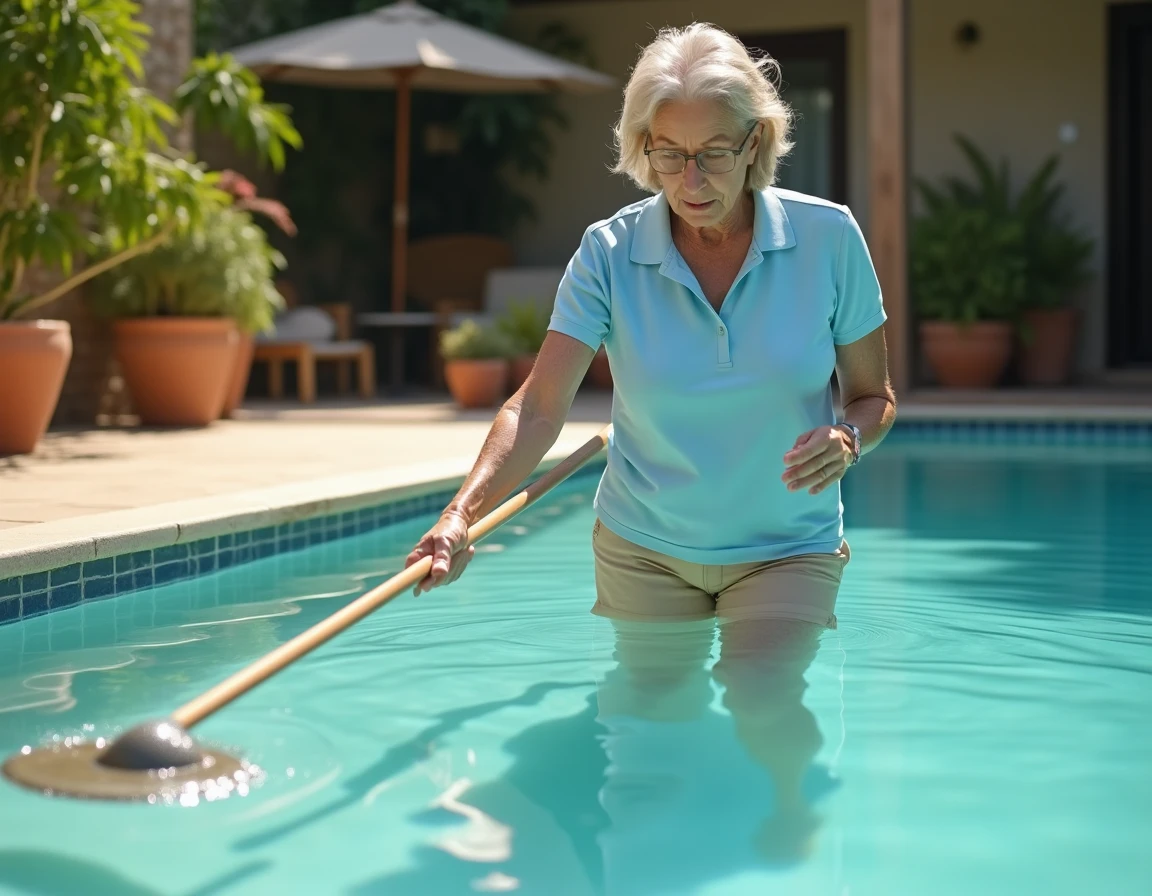
A pool with a shell installed for two weeks, a technical room not yet built, or a vacation departure with no one to monitor the pool: the reasons for being without active filtration for several days are more common than one might think. Stagnant water quickly becomes a breeding ground for algae and bacteria, especially in warm weather.
Maintaining healthy bathing water without forced circulation for a week requires rigorous preparation and some precise technical adjustments.
Organic load and temperature: the two variables that decide everything
Most guides treat the duration of absence as a simple count of days. The reality is more nuanced. What determines the speed of water degradation is the combination of water temperature and the organic load present in the pool at the time filtration stops.
Water at less than 20 °C, lightly used by bathers and protected from external inputs, can last much longer than water at 28 °C in which several people swam the day before. Managing a pool without filtration for a week therefore involves minimizing these two parameters before the system shuts down.
Cleaning the bottom and walls is the first step, often underestimated. Every organic residue (leaf, insect, sunscreen) serves as a nutrient for microorganisms. Manually removing visible debris and brushing the walls the day before the shutdown saves valuable time on proliferation.
Chemical balance before stopping filtration
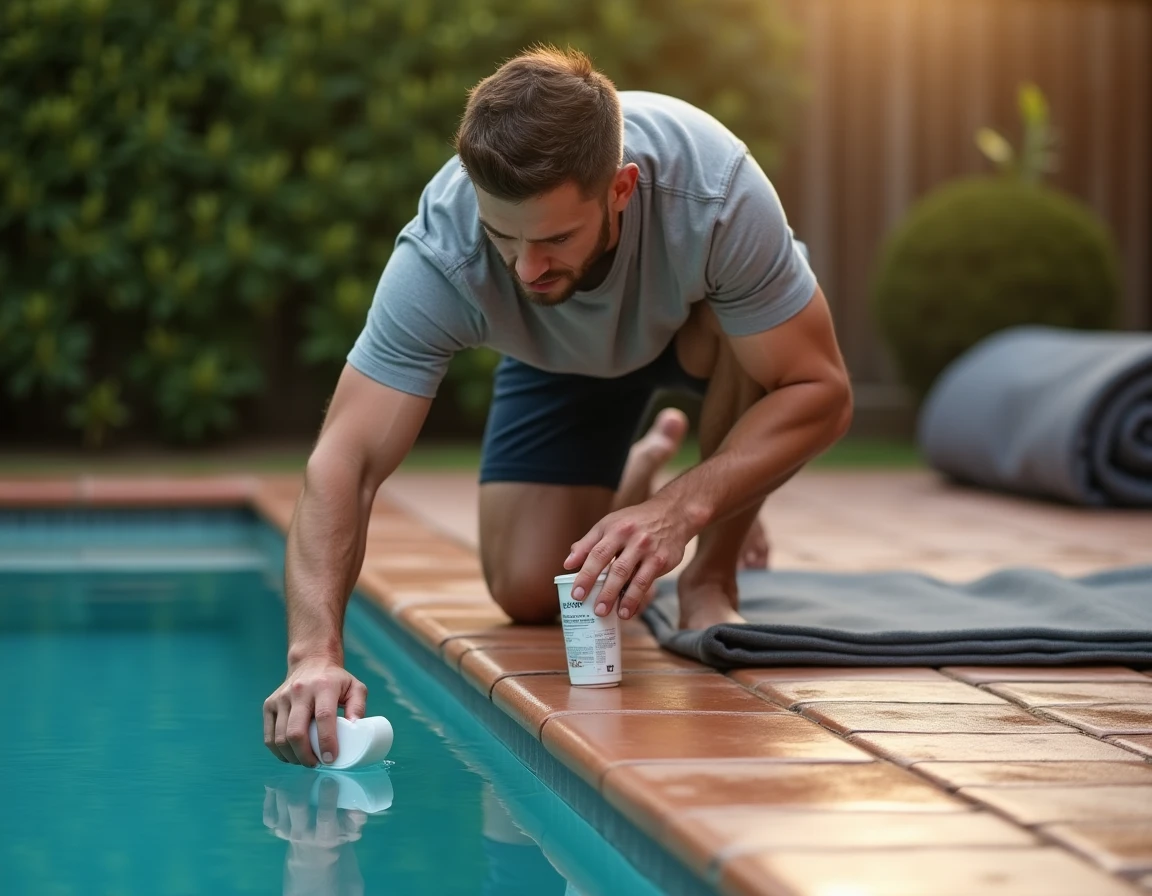
A chemical treatment does not compensate for already unbalanced water. The classic mistake is to overdose chlorine without checking the pH beforehand. A pH that is too high significantly reduces the effectiveness of chlorine, regardless of the dosage. The pH must be adjusted before any disinfectant is added, ideally within the lower range of the recommended level by your product’s manufacturer.
Once the pH is stabilized, a shock treatment forms the basis of the preparation. Recent sources consistently associate the absence of filtration with an increased risk of bacteria and cloudy water, hence the recommendation for a shock treatment performed the day before or on the day of shutdown. This one-time overdose raises the residual disinfectant level high enough to last several days without circulation.
Two points deserve attention:
- A slow-dissolving treatment product (tablet or floating block) complements the initial shock by gradually releasing disinfectant over the duration of the absence, extending protection beyond the first hours.
- The addition of a preventive algaecide reduces the risk of green proliferation, especially if the water temperature exceeds the threshold where algae grow rapidly.
- The stabilizer level (cyanuric acid) must be checked: an excess blocks the action of chlorine, making any shock treatment ineffective, no matter how massive.
Specific case of salt treatment
A salt electrolyzer only works if the pump is running. Without filtration, the cell no longer produces chlorine. Salt electrolysis is completely inactive without water circulation. Therefore, manual treatment with chlorine is necessary before departure, just like for a traditional chlorine pool.
Physical protection of the pool: a lever often more effective than chemistry
Several field reports show that covering the pool plays a role at least as decisive as chemical treatment during an absence. A cover or a shutter drastically limits three degradation factors:
- The influx of external debris (leaves, dust, insects) that feeds the organic load.
- Exposure to UV rays, which degrades free chlorine and accelerates the consumption of residual disinfectant.
- The warming of the water by the sun, which promotes the multiplication of microorganisms.
Covering the pool simultaneously reduces organic load, chlorine loss, and temperature rise. Over a week without filtration, this triple protection often makes the difference between cloudy water and water still suitable for swimming upon return.
For small above-ground or self-supporting pools, a simple tarp stretched with elastic bands is sufficient. For an inground pool, a roller shutter or a bar cover offers superior sealing.
Shock treatment upon return: a non-negotiable step
Even with meticulous preparation, a week of stagnant water alters the chemical parameters of the pool. Restarting does not just involve turning the pump back on.
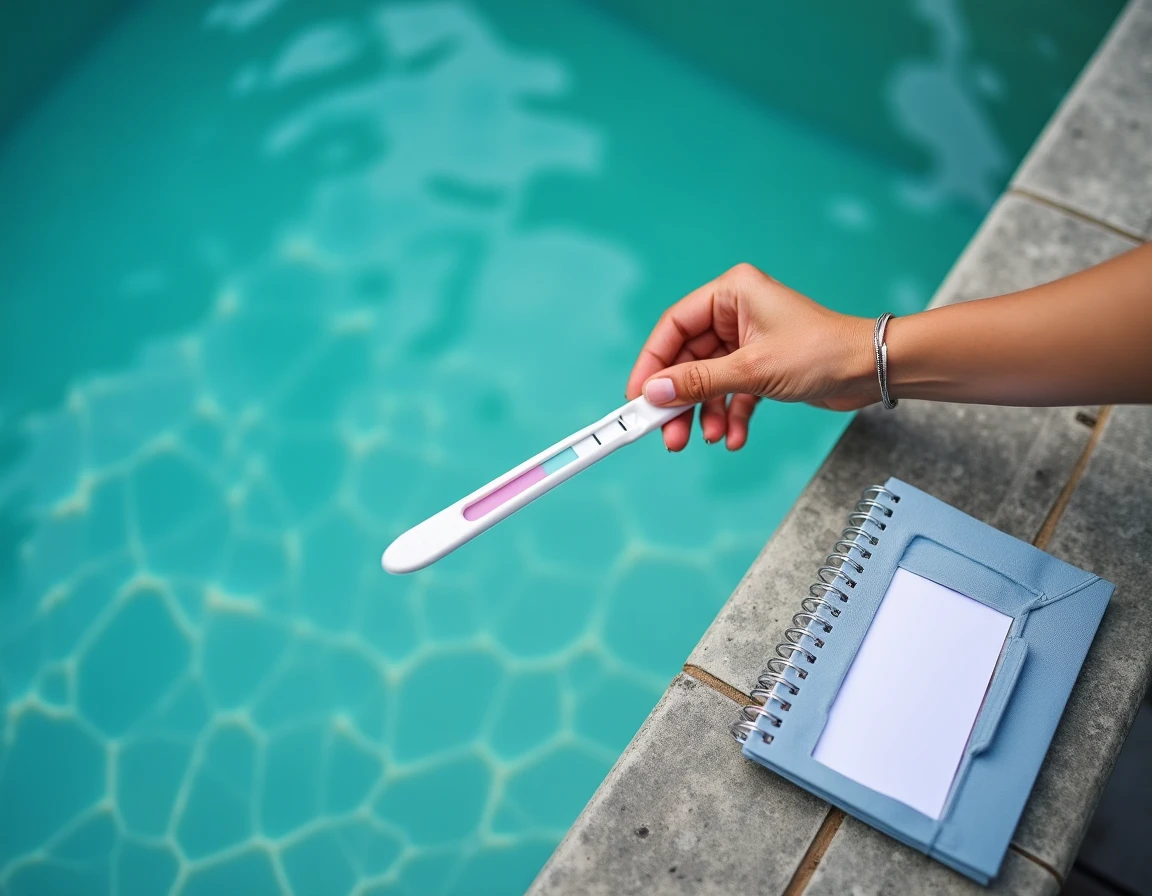
Before restarting filtration, debris that may have accumulated despite the cover (condensation, infiltration) must be removed. Then, a complete water analysis is essential: pH, disinfectant level, alkalinity. Field reports vary on the systematic need for a second shock treatment upon return, but if the water shows any cloudiness or unusual odor, shock treatment is essential before any swimming.
Filtration must run continuously for at least a full day after resuming, allowing the system to eliminate suspended particles and the disinfectant to act on the entire volume of water.
When the week has gone wrong
Water that is distinctly green or has a slimy deposit on the walls indicates advanced algae proliferation. A simple shock treatment may not be sufficient. In this case, thoroughly brushing the walls and bottom before the shock, followed by vacuuming the residues to the sewer (not to the filter), accelerates recovery. Filtration will need to run for several consecutive days.
Maintaining a pool without a filtration system for seven days remains an exercise in tolerance, not a normal mode of operation. The combination of prior cleaning, shock treatment, slow-dissolving tablet, and physical cover maximizes the chances of returning to acceptable water. Covering the pool remains the most cost-effective action relative to the effort it requires. Any negligence regarding one of these levers will be paid for upon return, often in hours of recovery and additional chemicals.