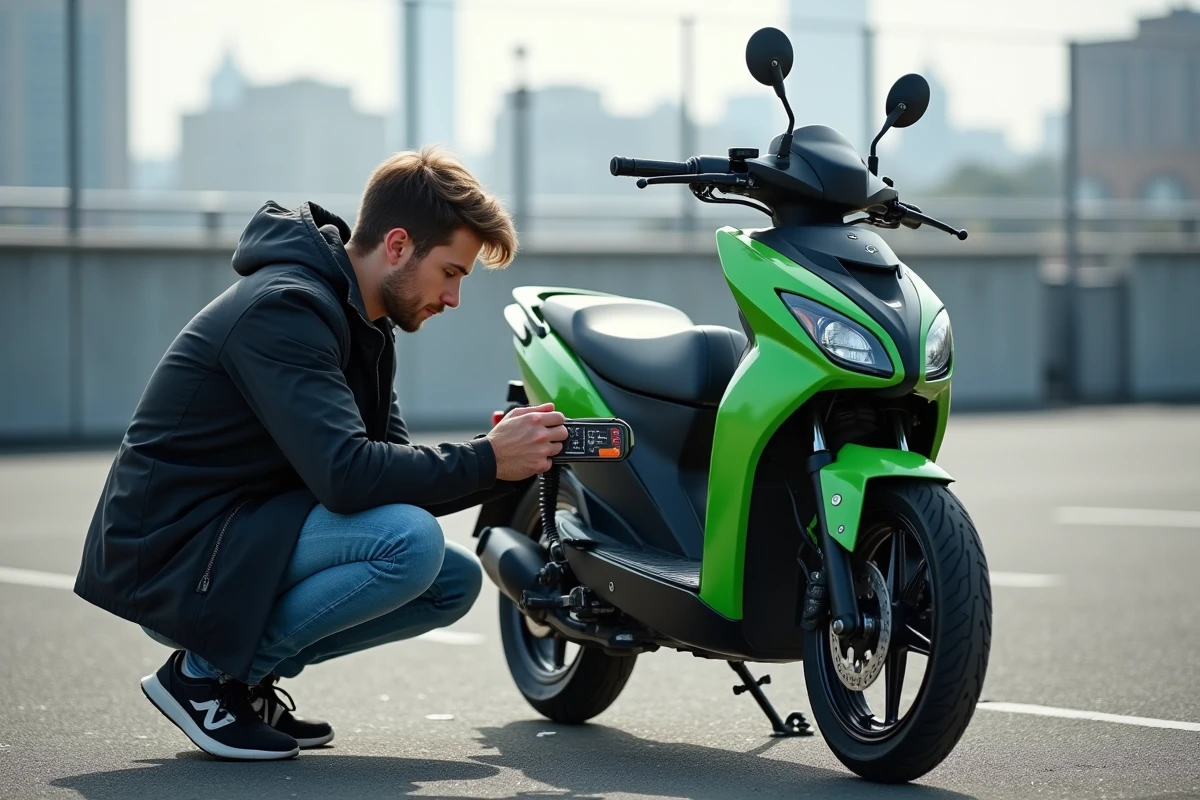
Exceeding the technical limits of a homologated vehicle means crossing a boundary that the law and manufacturers have not drawn by chance. Yet, the desire to boost one’s Super Soco TC 50 remains strong, even if it means venturing into a minefield where warranties and coverage vanish in the blink of an eye.
De-restricting a Super Soco TC 50 is not just a simple adjustment: each model, each software version, imposes its own subtleties. Depending on the country or market, the method evolves, making the operation less universal than it seems. Before modifying anything, it is essential to keep in mind that every technical action carries real consequences, sometimes irreversible, on the mechanics and your legal standing.
De-restricting your Super Soco TC 50: what you need to know before getting started
Forget the idea of a harmless DIY project: the Super Soco TC 50 is cutting-edge electronics. Its motor, batteries, and controller all work together according to a logic of safety and compliance. Trying to push the speed beyond the original framework means tackling devices designed to ensure balance: electronic limiters. Their role is clear; they exist to regulate power, comply with regulations, and protect the user.
Before going any further, you must weigh the pros and cons. Modifying your motorcycle means saying goodbye to the manufacturer’s warranty and the peace of mind that comes with adhering to standards. The intervention voids any protection provided, causes you to lose the ecological bonus, and places the vehicle out of play legally. In case of an issue, insurance will no longer cover you, and the financial and legal consequences can be severe.
Of course, the power and battery range change after de-restriction. But this gain does not come without a cost: engine wear may accelerate, the battery may lose autonomy, and the transmission may suffer from more intense use. Before touching anything, it’s better to ask yourself if the game is worth the candle. If you want to go further while minimizing mistakes, refer to a guide to de-restricting Super Soco TC: it details the steps to take, along with precautions to preserve your vehicle.
What are the risks and legal consequences of de-restriction?
Modifying a Super Soco TC is not just a matter of screwdrivers or software. As soon as you touch the controller or remove a limiter, you cross a red line in the eyes of the law. The warranty is immediately voided, and the motorcycle no longer meets French requirements. In the event of a check or an accident, the bill can be steep.
Here’s what you expose your vehicle and your liability to:
- Up to 1,500 euros in fines for driving a non-compliant vehicle
- Risk of immobilization and outright seizure of the motorcycle
- Liability in case of an accident, especially if there are injuries or property damage
- Systematic refusal of coverage by insurance: any incident becomes your personal, financial, and legal issue
But there is something even more serious: safety. The Super Soco TC was designed for specific power and speed. Exceeding these limits puts at risk the stability, braking capacity, thermal management of the battery, and road handling. An accident can occur faster than one might imagine, especially if relying on a machine that is no longer calibrated for its new uses.
Before taking the plunge, seek the advice of a competent professional. They will alert you to the technical and regulatory risks and the concrete impacts of de-restriction. Safety and compliance are not mere formalities; they condition the use of your two-wheeler on a daily basis.

Detailed steps to de-restrict your Super Soco TC 50 safely
Proceeding with the de-restriction of a Super Soco TC 50 requires rigor and organization. First rule: cut all electrical power, then remove the removable battery to work safely. This precaution protects the system and limits handling errors.
On this model, the electronic limiter restricts motor power and maximum speed. To intervene, you need to locate the controller, usually hidden under the seat or behind the side fairing, and then identify the limiter connector. At this stage, no forcing: every move counts. Some users prefer to install a reversible de-restriction module that connects to the original wiring harness. This solution allows for a return to the original state, without visible traces, if necessary.
After the modification, reattach the battery and check the operation in a private area, away from traffic. Monitor the motor temperature and the battery’s response. From this point on, more frequent maintenance is necessary: keep an eye on the brakes, tire pressure, and electrical connections.
To maximize autonomy and reliability after de-restriction, certain accessories make a difference. Here are those you should prioritize:
- High-performance tires for better grip
- Optimized capacity battery to limit autonomy losses
- Appropriate maintenance kit to preserve electronic components
Careful maintenance and suitable equipment are the best defense against premature wear and unpleasant surprises. With method and caution, de-restricting a Super Soco TC 50 can be done without sacrificing reliability or safety. But once the door is opened, it is impossible to turn back without facing every consequence. This is the true face of mechanical freedom, exhilarating, but never without risks.