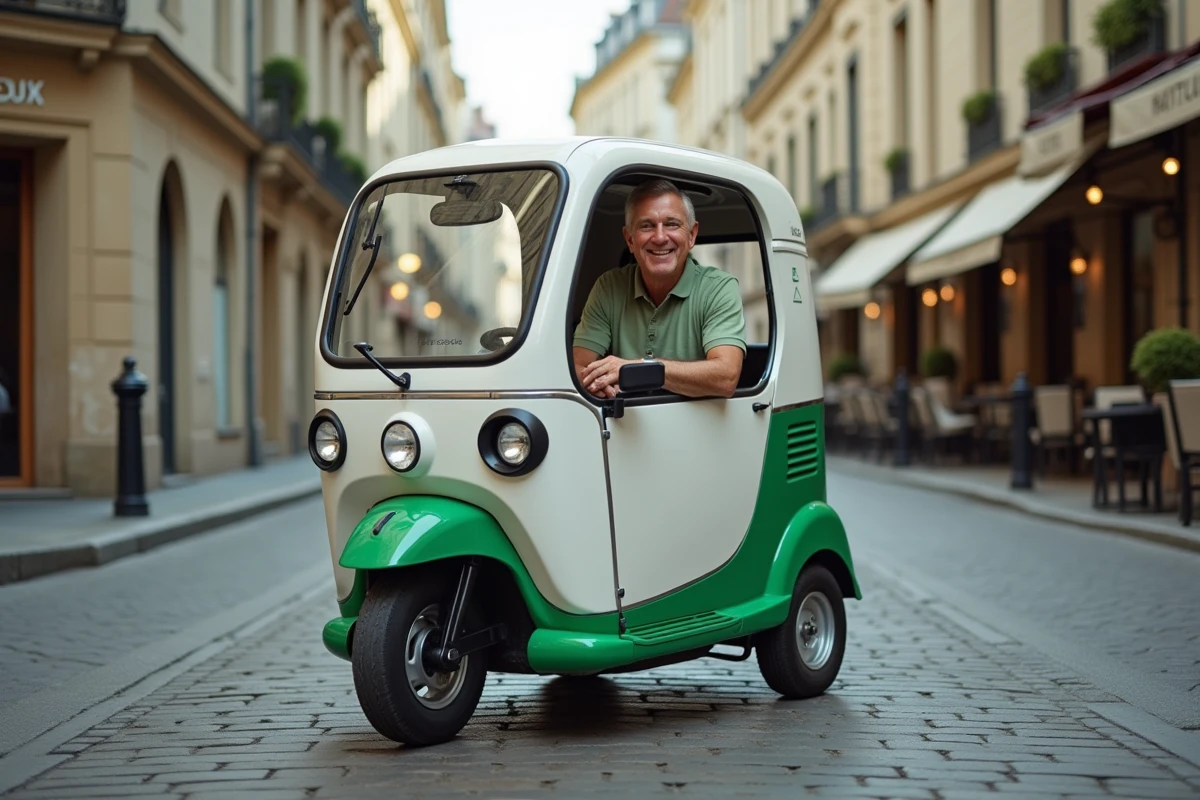
The electric tuk-tuk market in France remains a niche segment, but its growth has been accelerating in recent years. Between imported models from China, specialized distributors in Île-de-France, and offers on B2B platforms, the displayed prices vary widely depending on the motorization, capacity, and level of equipment.
Real Range of Electric Tuk-Tuks and Reliability of Manufacturer Specs
Technical sheets announce attractive ranges, often around 80 km for lithium models. However, field reports tell a different story. According to Parisian operators interviewed by La Tribune in January 2026, the real range drops by 20 to 30% in winter conditions compared to manufacturer data.
The cold degrades the capacity of lithium-ion batteries, a known phenomenon but rarely quantified by sellers. For a guided tour operator in Paris or Marseille, this decrease means an additional recharge in the middle of the day, or even a second vehicle in rotation.
The battery question also affects the price. A model equipped with a lead battery costs significantly less to purchase, but its range and lifespan are lower. Lithium batteries increase the initial bill while reducing the long-term recharge cost.
To assess the price of an electric tuk-tuk in France, one must therefore consider the total cost over three to five years, not just the catalog price.
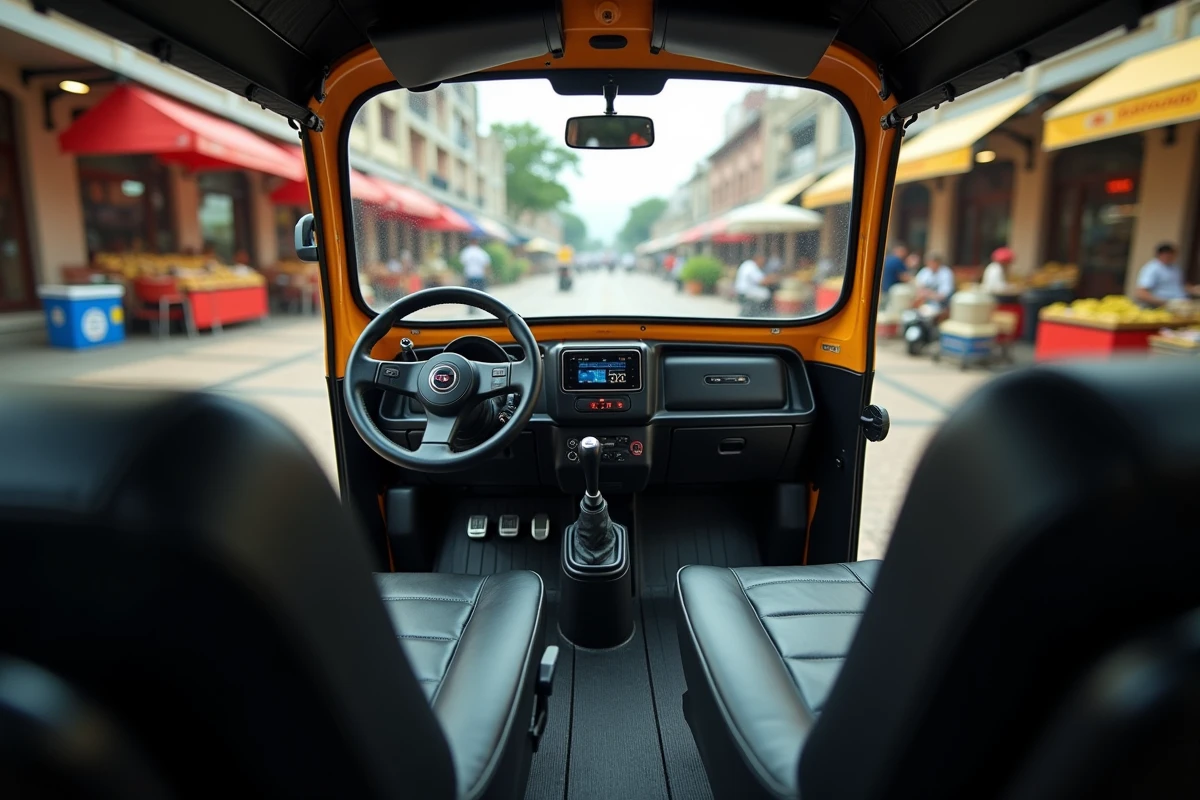
Purchase Price of a New or Used Electric Tuk-Tuk in 2025
The new prices observed on B2B platforms vary widely. On Accio (formerly Alibaba.com), electric passenger tricycles display unit prices starting at a few hundred dollars for basic models, and rising well beyond for road-approved versions with enclosed cabins. Made-in-China models equipped with a 3,000 W motor fall into a mid-range category.
In France, distributors like Tuktuk France offer ready-to-roll models (Limo GT, Vendo) with customization, approval, and after-sales service. The selling price in France includes approval, VAT, and compliance, which explains the gap with the gross prices from Asian wholesalers.
The used market remains marginal. Few electric tuk-tuks are still circulating in France, and the fleet is too new to generate a structured secondary market. The few listings found mainly concern gasoline Piaggio Ape models, which remain dominant in Southern Europe.
Spare Parts and Maintenance: A Cost Not to Underestimate
The AVEM report (February 2026) on the electric tricycle market in Europe highlights a recurring issue: spare parts for Chinese models are difficult to find locally. A faulty motor or controller can immobilize the vehicle for several weeks while waiting for the part to arrive.
The models distributed by French networks offer an advantage in this regard, with a stock of parts in the mainland. The additional cost at purchase is partially justified by this availability.
Taxation and Insurance for an Electric Tuk-Tuk for Professional Use
The purchase price represents only a fraction of the actual budget for a professional. The administrative classification of the vehicle determines the applicable tax regime. The decree of December 15, 2024, published in the Official Journal, concerns the classification of light quadricycles, a category that includes most electric tuk-tuks limited to 45 km/h.
This classification has several concrete consequences:
- A B license is sufficient for driving, but an AM license may be required depending on the power and maximum speed of the model. The distinction depends on the registration document issued.
- VAT is recoverable for declared professional use (transport of people, street vending, tourist visits), provided that the vehicle is registered as a company asset.
- Accounting depreciation follows the rules for light utility vehicles, with a ceiling that varies depending on whether the tuk-tuk is classified as a passenger vehicle or utility vehicle.
Professional insurance for an electric tuk-tuk costs more than standard auto insurance, mainly because insurers have little actuarial data on this type of vehicle. Field reports diverge on this point: some operators obtain reasonable rates through specialized soft mobility brokers, while others face coverage refusals.

Regional Subsidies for Electric Tuk-Tuks
The Île-de-France Region has included electric tuk-tuks in its “Green Mobility 2025-2030” plan, with subsidies dedicated to the acquisition of clean vehicles for sustainable tourism. The exact amount of aid depends on the application, but this subsidy can significantly reduce the entry cost for an operator based in Paris or the inner suburbs.
The available data does not confirm the existence of equivalent programs in other regions. Marseille, Lyon, or Bordeaux, where tuk-tuk circuits are developing, do not seem to have implemented a specific program to date.
Electric Tuk-Tuk or Gasoline: What the Price Doesn’t Say
Gasoline models (like the Piaggio Ape) remain cheaper to purchase and benefit from a denser maintenance network. However, they can no longer circulate in low-emission zones (LEZ) that are multiplying in major French cities.
For tourist ride use in city centers, the electric tuk-tuk has become the only viable option in Parisian and Marseilles LEZs. It is no longer a voluntary ecological choice; it is a regulatory constraint.
The simplified maintenance of electric models (no oil changes, no air filter, no clutch) partially offsets the initial extra cost. The recharge cost remains very low, making the energy expense almost negligible compared to a full tank of gasoline.
The real trade-off lies in the battery lifespan and the availability of parts. An operator planning to keep their vehicle for five years or more must budget for a battery replacement, which can represent a significant portion of the initial purchase price. Without a long-term warranty from the distributor, this risk remains the operator’s responsibility.