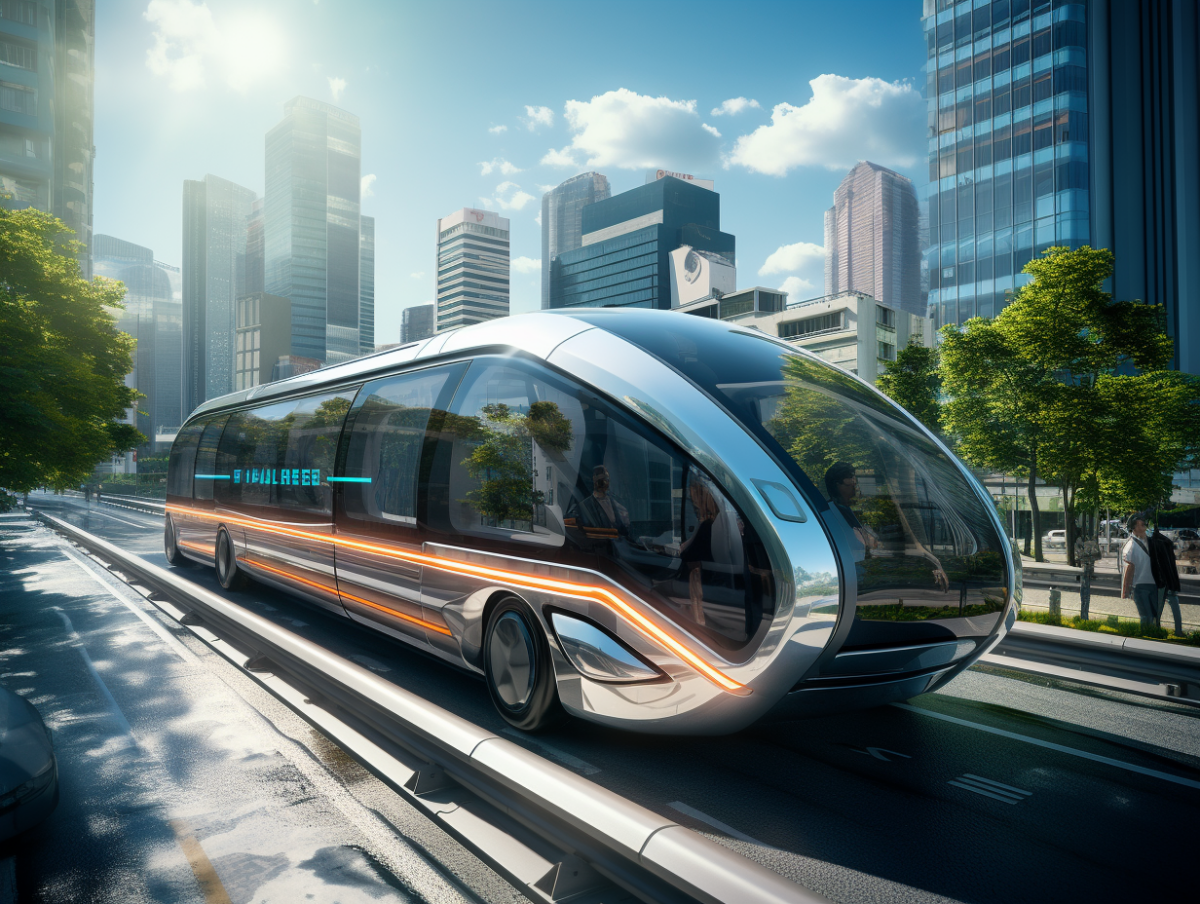
The advent of autonomous vehicles seems to be rushing towards a tangible reality rather than a futuristic fantasy. These machines, equipped with cutting-edge technologies, promise to transform the way we travel, bringing comfort, efficiency, and safety. They rely on artificial intelligence, sophisticated sensors, and advanced algorithms to navigate traffic without human intervention. As tests multiply on roads around the world and legislation begins to adapt, the question of their integration into the daily lives of drivers arises sharply. However, major challenges persist, particularly in terms of safety, ethics, and social acceptance.
Current and Future Advances in Autonomous Vehicle Technology
The race towards full autonomy for vehicles continues fiercely in the automotive industry, and automakers are competing with ingenuity to reach the milestones of levels of autonomy. Mercedes, a pioneer in the field, has obtained permission to sell level 3 cars, although this advancement is currently limited to Germany. Meanwhile, General Motors, with its subsidiary Cruise, firmly believes in the future of 100% autonomous cars, with Mary Barra even announcing the imminent commercialization of these vehicles.
The latest CES in Las Vegas was a theater of revelations and major announcements for the future of the autonomous car. Waymo showcased its advanced system, which, despite its technical prowess, still does not match the performance of a human driver. The French startup Heex, for its part, asserts its belief in the potential of the autonomous car, demonstrating sustained interest in this technology.
Companies like EasyMile are focusing their efforts on developing autonomous vehicles for public transport and logistics, exploring practical applications in controlled environments. This approach, less ambitious than the promise of total autonomy, is bearing fruit and seems to better match the current reality of the market.
Challenges remain significant. Automakers’ promises have been revised downward in the face of delays in development and the complexity of technical and regulatory obstacles. Moteur Mag emphasizes that the industry must face a reassessment of expectations, with a focus on more realistic and technologically achievable use cases. The future of autonomy is thus shaping up through a series of incremental innovations rather than a sudden revolution.
Societal and Regulatory Implications of Adopting Autonomous Cars
The transition to autonomous mobility raises critical questions regarding regulation and societal impact. Regulatory authorities are working to adapt legal frameworks to ensure road safety while fostering innovation. Bruno Mendes da Silva, a keen observer of accidentology, points out the safety issues surrounding autonomous cars, demonstrating that current statistics call for a cautious approach to adopting this technology.
Anne-Marie Idrac, a key player in defining the national strategy for autonomous vehicles, is contemplating a harmonious integration of these vehicles into the mobility sector. The dialogue between public authorities, manufacturers, and users is essential to create a favorable ecosystem in which the autonomous car measures its promises against the reality of infrastructure and usage.
The role of companies such as Bpifrance in supporting the development of autonomous vehicles is significant. By injecting substantial investments, these players contribute to the emergence of an innovative and competitive automotive industry on the international stage. José Baghdad, a market specialist, analyzes the evolution of demand and the alignment of offers with a shifting economic reality.
Nevertheless, the road to full autonomy for vehicles is strewn with obstacles. Salah Eddine Echatoui advocates for a realistic vision: advancements must be measured and gradual. Benoit Perrin, a safety expert, shares this approach and emphasizes the development of a solid technological infrastructure and a strict legal framework to avoid pitfalls and maximize the societal benefits of autonomous cars.